Bariatric Surgery Colorectal Surgery Hernia Surgery Endoscopy Other Abdominal Diseases BMI Calculator Blog Follow Dr Cha Book an Appointment

Hernia Repair

Hernia
Surgery

A hernia will not heal on its own — but with the right surgical approach, repair is straightforward and recovery is fast. Dr Cha offers minimally invasive hernia repair for all common hernia types, with mesh used selectively based on each patient's needs.

6
Hernia Types
Treated
Surgical Approaches

When tissue pushes
where it shouldn't

A hernia occurs when an internal organ or tissue pushes through a weak spot in the surrounding muscle or connective tissue wall. The result is often a visible bulge, discomfort, or pain — especially when coughing, bending, or lifting.

Hernias do not resolve on their own. Left untreated, they tend to grow larger over time and risk becoming incarcerated (trapped) or strangulated (blood supply cut off) — both of which are surgical emergencies.

Dr Cha offers a full range of hernia repairs using the most appropriate technique for each type and individual patient — from keyhole and robotic approaches to open surgery when needed.
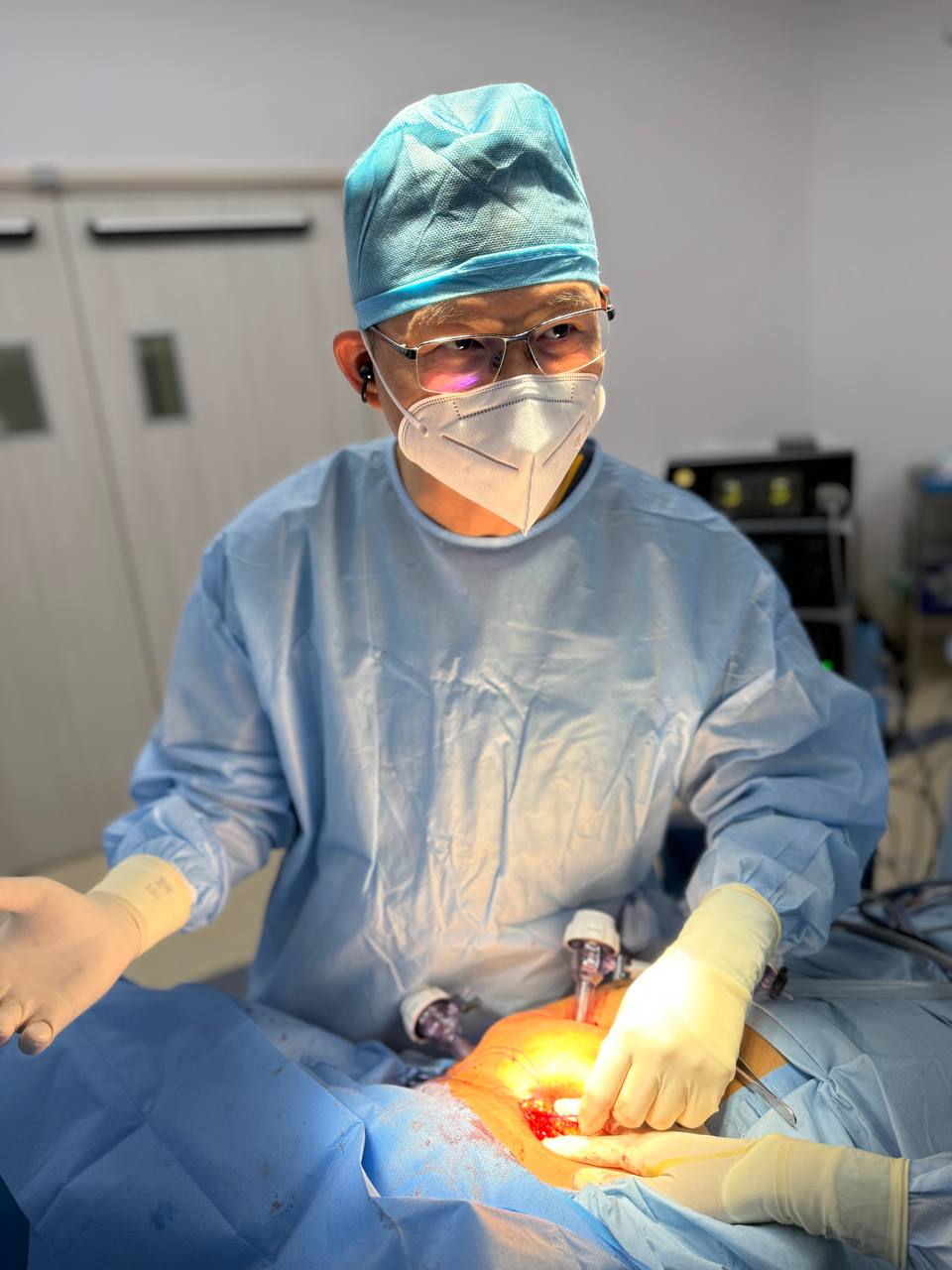
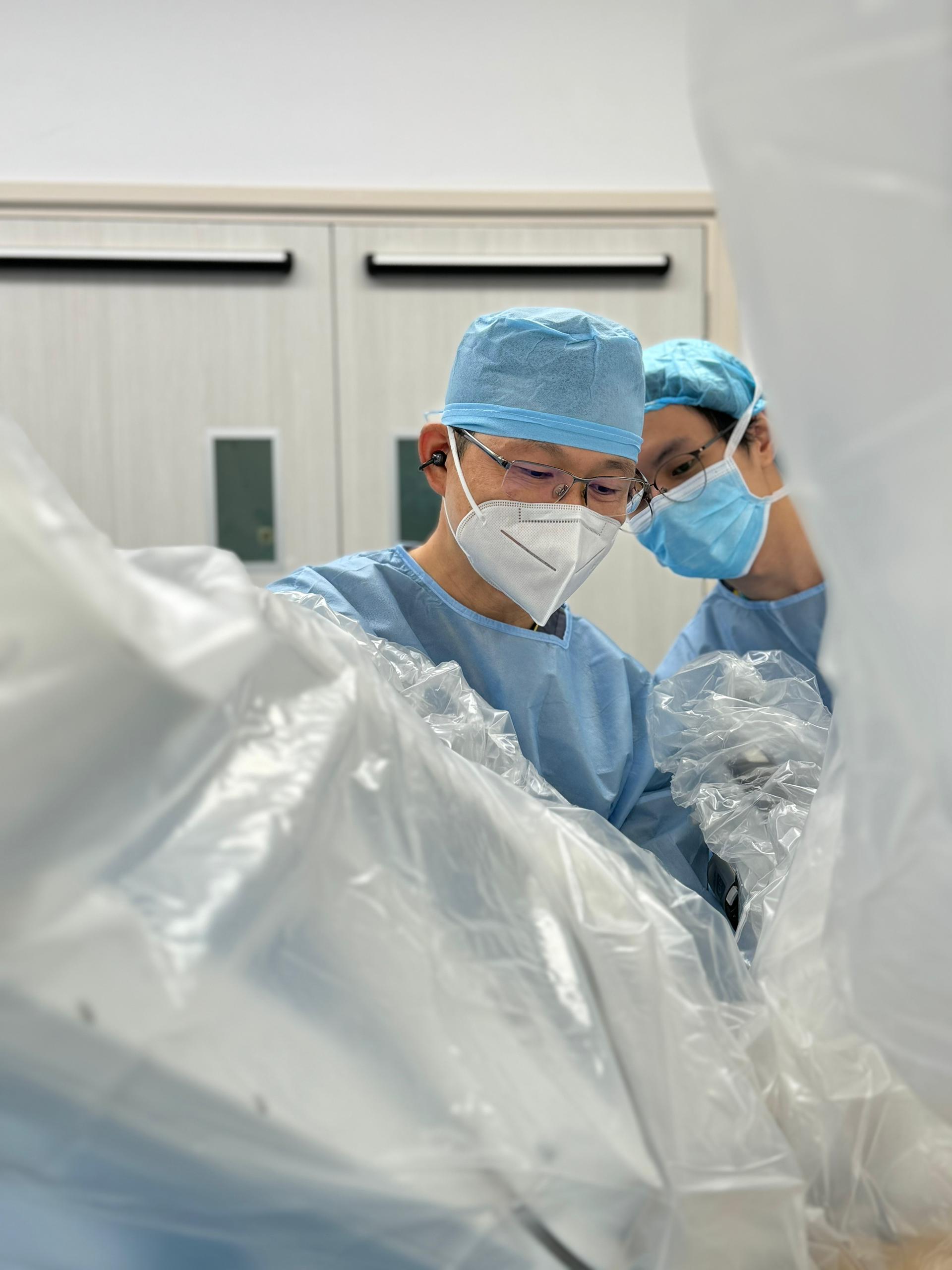
Dr Cha Kar Huei performing laparoscopic hernia surgery
⚠️

Important: If your hernia becomes suddenly painful, firm, or cannot be pushed back in, seek emergency care immediately. This may indicate a strangulated hernia, which is a life-threatening condition requiring urgent surgery.

Hernia Types

Dr Cha treats all common types of abdominal and groin hernias, with a tailored approach for each patient based on hernia size, location, and overall health.

Inguinal Hernia
Most Common

Inguinal Hernia

The most common type of hernia, occurring in the groin when abdominal tissue or part of the intestine pushes through a weak spot in the lower abdominal muscles. More common in men. Often causes a noticeable bulge in the groin that may ache or burn.

  • Laparoscopic TEP / TAPP
  • Robotic repair
  • Open repair available
  • Mesh used selectively
Umbilical Hernia
Common

Umbilical Hernia

Occurs when part of the intestine or fatty tissue pushes through the abdominal muscles near the belly button. Common in infants but also affects adults — particularly those who are overweight, pregnant, or have had multiple pregnancies.

  • Laparoscopic repair
  • Open repair
  • Mesh for larger defects
  • Day surgery option
Incisional Hernia
Post-Surgical

Incisional Hernia

Develops at the site of a previous surgical incision where the abdominal wall has weakened. Can occur months or years after abdominal surgery. May grow progressively larger if left untreated. Dr Cha uses laparoscopic or robotic techniques to repair these with minimal additional scarring.

  • Laparoscopic IPOM repair
  • Robotic-assisted repair
  • Mesh reinforcement
  • Complex cases managed
Hiatal Hernia
Chest / Abdomen

Hiatal Hernia

Occurs when part of the stomach pushes upward through the diaphragm into the chest cavity. Often associated with gastro-oesophageal reflux disease (GERD), causing heartburn, chest pain, and regurgitation. Most are managed medically, but larger or symptomatic hernias may require surgical repair.

  • Laparoscopic hiatal repair
  • Fundoplication for reflux
  • Associated GERD treatment
  • Minimally invasive
Femoral Hernia
High Risk

Femoral Hernia

A less common but higher-risk hernia that occurs just below the groin, in the upper thigh. More frequent in women. Femoral hernias carry a higher risk of strangulation than inguinal hernias and are generally repaired promptly after diagnosis. Often present as an emergency.

  • Prompt repair advised
  • Laparoscopic approach
  • Open repair in emergencies
  • High strangulation risk
Epigastric Hernia
Upper Abdomen

Epigastric Hernia

Occurs in the upper abdomen between the belly button and the chest, when fat or tissue pushes through the abdominal wall. Usually small and may cause localised tenderness or a visible lump. Surgical repair is straightforward and often performed as a day surgery procedure.

  • Laparoscopic repair
  • Open repair
  • Often day surgery
  • Fast recovery

Mesh — used when it matters

Surgical mesh is a medical device used to reinforce the weakened area of the abdominal wall during hernia repair. It significantly reduces the risk of hernia recurrence and is widely considered the standard of care for many hernia types.

However, Dr Cha does not use mesh in every case. The decision is made individually, based on the hernia type, size, location, and the patient's overall health and preferences. When mesh is indicated, only high-quality, proven mesh products are used.

When Mesh Is Used

Larger hernias, inguinal hernias, incisional hernias, and cases with a high risk of recurrence generally benefit from mesh reinforcement for a durable repair.

🔄

When Mesh May Not Be Needed

Small hernias, paediatric cases, or hernias in certain locations may be repaired with sutures alone — avoiding mesh where it adds no significant benefit.

🩺

Your Decision, Fully Informed

Dr Cha will discuss the pros and cons of mesh repair with you during consultation so you can make a fully informed decision about your treatment.

🤖 Advanced Procedure

Robotic TAR —
Large Ventral Hernias,
Solved Minimally

Robotic Transversus Abdominis Release

Large ventral hernias — particularly complex incisional hernias — represent one of the most challenging problems in abdominal wall surgery. The defects are wide, the surrounding tissue is often scarred, and the repair demands precise dissection deep within the abdominal wall layers.

Traditionally, open surgery has been the only reliable way to perform a Transversus Abdominis Release (TAR) — a technique that releases the transversus abdominis muscle to gain enough tissue mobility to close large defects and place a wide mesh behind the muscles. But open TAR comes at a significant cost: a large incision, high post-operative pain, prolonged hospital stay, and a long recovery.

Robotic surgery changes this entirely. The robotic platform gives Dr Cha the dexterity and visualisation needed to perform the same complex TAR technique through small keyhole incisions — achieving the same surgical goals with a fraction of the trauma to the patient.

Robotic TAR Procedure Large Ventral Hernia procedure
The Problem

Large Ventral Hernia

  • Wide abdominal wall defect
  • Scarred surrounding tissue
  • High recurrence risk if under-repaired
  • Requires deep muscle layer release
  • One of the hardest hernias to fix
Open TAR Surgery

Effective — But Painful

  • Long midline abdominal incision
  • Significant post-op pain
  • High wound complication risk
  • 5–7 days hospital stay
  • Weeks of recovery
Robotic TAR by Dr Cha

Equally Effective — Far Less Trauma

  • Only small keyhole incisions
  • Minimal post-operative pain
  • Lower wound complication risk
  • Shorter hospital stay
  • Faster return to daily life

Surgical Approaches

The right technique depends on the hernia type, size, and your individual anatomy. Dr Cha will recommend the most suitable approach during your consultation.

🔬

Laparoscopic

Keyhole surgery through 3 small incisions. Less pain, faster recovery, and lower infection risk compared to open surgery. Preferred for most routine hernia repairs.

🤖

Robotic Surgery

Enhanced precision for complex or recurrent hernias. Robotic assistance allows finer suturing and mesh placement, particularly useful for large incisional and hiatal hernias.

⚕️

TEP

Total Extraperitoneal repair — a laparoscopic technique for inguinal hernias that operates entirely outside the abdominal cavity, reducing risk of internal injury.

⚕️

TAPP

Transabdominal Preperitoneal repair — another laparoscopic approach for inguinal hernias that allows better visualisation and is preferred in certain anatomical situations.

🏥

Open Surgery

Traditional open repair remains the technique of choice for emergency presentations, strangulated hernias, or cases where a minimally invasive approach is not suitable.

Symptoms of
a hernia

Hernias can sometimes be asymptomatic and discovered incidentally. More often, they cause noticeable symptoms that worsen over time. If you notice any of the following, book a consultation with Dr Cha.

  • A visible bulge or lump in the groin, abdomen, or upper thigh
  • Aching, burning, or heaviness at the bulge site
  • Discomfort or pain when bending over, coughing, or lifting
  • A feeling of weakness or pressure in the abdomen
  • Heartburn, chest pain, or difficulty swallowing (hiatal hernia)
  • Nausea or a dragging sensation in the groin

⚠️ Seek Emergency Care If…

  • The hernia bulge becomes suddenly tender, firm, or darker in colour
  • You cannot push the hernia back in (incarceration)
  • You experience severe abdominal pain, nausea, or vomiting
  • The area around the hernia becomes red or swollen
  • You develop a fever alongside hernia pain

These may be signs of a strangulated hernia — a surgical emergency. Go to the nearest emergency department or call +603 7457 2898 immediately.

As Published In 星洲日报 Sin Chew Daily
📰
16 Aug 2024
醫識力 特約

减手抖缝合更精准 · 机器人手术三维治疝气

Robotic and laparoscopic hernia repair — how 3D visualisation and robotic precision achieve better outcomes through keyhole incisions, with lower recurrence and faster recovery.

📄 Read Article (中文)
📰
20 Jun 2025
醫識力 · 肝膽腸胃

痔疮?肛瘻?疝气?— 痛血癢腫肛腹異狀快就醫

Dr Cha covers haemorrhoids, anal fistula, and hernia — how to tell them apart, when surgery is needed, and how to stay healthy to prevent recurrence.

📄 Read Article (中文)
📰
星洲日报
Sin Chew Daily
16 August 2024

As Published In 星洲日报

减手抖缝合更精准 — 腹腔镜辅以机器人手术治疝气

Robotic Precision for Hernia Repair — Laparoscopic & Robotic Surgery

Dr Cha explains how robotic-assisted laparoscopic surgery offers superior precision for hernia repair — less tremor, better visualisation, faster recovery, and lower recurrence rates compared to conventional approaches.

Read Article →
📰
星洲日报
Sin Chew Daily
20 June 2025

As Published In 星洲日报

痔疮?肛瘻?疝气?痛血癢腫 肛腹異狀快就醫

Haemorrhoids, Anal Fistula & Hernia — Seek Help Early

Dr Cha covers hernia alongside other common anorectal conditions — explaining symptoms, when to seek treatment, and the surgical options available for inguinal hernia repair.

Read Article →

Book a consultation with Dr Cha — early repair is safer, simpler, and faster to recover from.

Book an Appointment